Commercial truck accidents in Texas are not just standard car crashes on a larger scale. They are highly complex, high-stakes legal battles governed by a strict intersection of state laws and federal safety mandates. Unlike a typical fender bender, 18-wheeler collisions involve severe, catastrophic injuries, multiple liable corporate entities, massive commercial insurance policies, and significantly larger financial settlements.
Understanding these foundational differences is critical for victims looking to protect their legal rights and secure maximum compensation after a devastating Texas truck crash.
What Vehicles Are Legally Considered Trucks?
Under Texas law, the classification of a “truck” encompasses a wide range of vehicles designed primarily for commercial transport and heavy-duty tasks. These are typically divided by their Gross Vehicle Weight Rating (GVWR):
Light Trucks: Vehicles like standard pickup trucks and commercial vans, typically used for personal or light business tasks. They generally have a GVWR of 10,000 pounds or less.
Medium Trucks: Covering a GVWR from 10,001 to 26,000 pounds. Common examples include box trucks, large delivery vans, and local freight vehicles.
Heavy Trucks: Massive commercial vehicles with a GVWR exceeding 26,000 pounds. This category includes tractor-trailers, 18-wheelers, semi-trucks, and heavy freight carriers.
Specialized Trucks: Vehicles engineered for highly specific industrial functions, such as cement mixers, dump trucks, and heavy-duty tow trucks. These operate under distinct safety standards and regulations.
Because commercial vehicles pose a significantly higher risk to the public, they are tightly regulated. Operators must secure specific commercial driver’s licenses (CDLs), carry elevated insurance minimums, and comply with strict federal safety guidelines.
7 Key Differences Between Truck and Car Accident Lawsuits
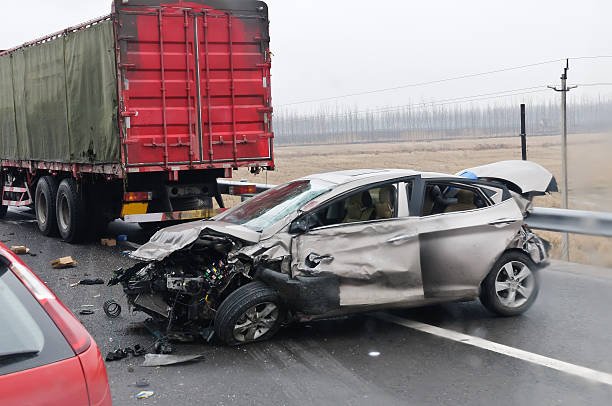
While the legal definition of a standard car accident is generally straightforward, the process of pursuing truck accident claims in Texas requires navigating a maze of federal oversight and corporate defense tactics.
Here is a breakdown of why commercial trucking lawsuits are distinctly different from passenger vehicle claims:
1. Truck Accidents Result in Exponentially Greater Damages
Due to the sheer size and 80,000-pound weight limit of commercial semi-trucks, collisions frequently result in fatal or catastrophic injuries. Victims face staggering emergency medical costs, lifelong rehabilitation, and permanent loss of earning capacity. Consequently, truck accident compensation is inherently higher. However, because the financial exposure is so massive, corporate insurers fight aggressively to minimize payouts—making elite legal representation non-negotiable.
2. A Tangled Web of Multiple Liable Parties

In a two-car crash, fault typically rests entirely on one driver. In a commercial trucking wreck, liability is often shared among several entities. Depending on the investigation, liable parties could include the truck driver, the motor carrier (trucking company), the cargo loading contractor, the logistics broker, or even the manufacturer of a defective truck part. Identifying exactly who is liable requires forensic analysis of corporate policies and contracts.
3. Strict Federal and State Regulations
Car accidents are governed primarily by state traffic laws. Truck accidents are heavily regulated by federal agencies, specifically the Federal Motor Carrier Safety Administration (FMCSA). These sweeping federal mandates strictly control driver qualifications, mandatory Hours-of-Service (HOS) rest periods, drug testing protocols, and mandatory fleet maintenance schedules. Proving a violation of FMCSA rules is often the key to winning your case.
4. Highly Complex Digital and Physical Evidence
Evidence in a car crash usually consists of a police report and witness statements. Truck accident investigations demand high-level digital forensics. Crucial evidence includes Electronic Logging Device (ELD) data, “black box” engine control modules (which record pre-crash speed and braking), weigh station receipts, and corporate dispatch logs. A specialized attorney will act immediately to legally force the preservation of this data before the trucking company deletes it.
5. Significantly Larger Settlement Values
Because the physical devastation is so profound and commercial insurance policies carry minimum limits ranging from $750,000 to over $5 million, 18-wheeler accident settlements dwarf standard car crash payouts. Payouts are meticulously calculated based on catastrophic medical forecasting, lifelong wage loss, and profound physical suffering.
6. Unique Legal Timelines and Defense Strategies
While the Texas statute of limitations generally gives victims two years to file a personal injury claim, the actual timeline of a commercial lawsuit varies wildly. Corporate defense teams deploy rapid-response investigators to the crash scene within hours to start building a case against you. Complex litigation involving multiple corporate defendants and disputed liability can easily extend a case from several months to a few years.
7. The Impact of Texas Comparative Negligence
Texas operates under a “modified comparative fault, ” system with a 51% bar. If an insurance adjuster successfully shifts 51% or more of the blame onto you, you recover nothing. Because trucking companies have vast legal resources, they will aggressively attempt to blame the victim for the crash. An experienced legal expert is necessary to block these tactics and protect your percentage of the settlement.
Why These Differences Matter for Your Case

Commercial truck crashes are not just “bigger car accidents”—they are complex corporate litigation. Trucking companies and their multi-national insurers possess unlimited resources and dedicated legal teams whose sole job is to deny your claim. Attempting to navigate this environment without specialized legal counsel puts you at a severe, potentially ruinous, disadvantage.
The Necessity of Specialized Legal Representation
Given the high stakes, securing a specialized 18-wheeler accident lawyer is an absolute necessity. These litigators understand the nuances of FMCSA regulations, digital evidence extraction, and corporate negotiation. Furthermore, premier injury attorneys operate on a strict contingency fee basis. This means they finance the entire investigation and you pay zero upfront costs—they only take a percentage of the final settlement if they win your case.
Conclusion
While navigating the aftermath of a standard car crash is difficult, taking on a commercial trucking corporation is an entirely different battle. From identifying hidden liable parties and navigating federal safety mandates to aggressively negotiating high-value truck accident lawsuit settlements, the process requires specialized legal firepower. Partnering with a proven truck accident lawyer in Texas ensures your rights are fiercely protected, giving you the leverage necessary to secure the maximum compensation you deserve.

James David is a researcher focused on Texas transportation safety and consumer rights.